






 Spanish News Today
 Alicante Today
 Andalucia Today



The Mediterranean prawn has traditionally had real economic and cultural importance in the Mar Menor area. They have supported local fishing communities for generations. But over time, catches have declined and the species are now under pressure.
Now, a new project led by the University of Murcia (UMU) looks to help with the recovery of the Mediterranean prawn. And they don’t just want to study it, they want to help reproduce it in captivity for the first time ever.
It’s a two-year project carried out alongside the University of Alicante and IMIDA (Murcia’s agricultural and environmental research institute), using prawn populations from both the Mar Menor and Castellón.
One of the surprising points from their research is the fact that most prawns now sold in Spanish supermarkets don’t come from the Mediterranean at all. Instead, they are usually farmed in countries in the Pacific region, mainly Ecuador. This usually comes down to price, as they are only caught in the wild, there is a limited supply of the Mediterranean prawn, and they tend to be more expensive.
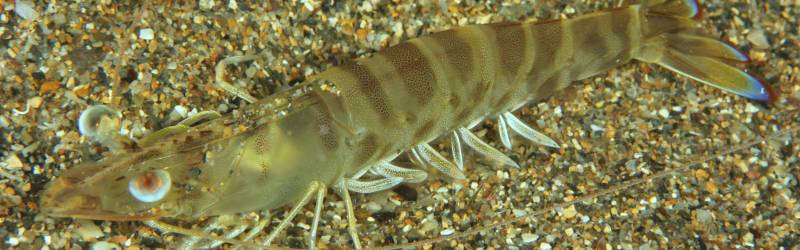
The research project is also driven by the growing concerns about the environmental vulnerability of the species, affected by factors such as climate change and ecosystem degradation in Mediterranean coastal waters.
To achieve breeding success, the project will use recirculating aquaculture systems (RAS), which filter and reuse water, reducing consumption and environmental impact by treating waste before it is released.
Researchers will also adjust light, temperature and feeding conditions to develop an effective breeding method that ensures both productivity and animal welfare.
The project has two main goals: in the long term, they want to develop commercially viable Mediterranean prawn farming in Spain, and in the short term, to support the recovery and restocking of wild populations.
This project will also help contribute to the Mar Menor’s recovery by restoring native prawn populations, supporting biodiversity, and reinforcing the traditional small-scale fishing sector.
Images: UMU